



DON’T discuss politics in the office. DO discuss office politics when wanting to hire.
I focus on leadership searches, where this is particularly relevant, but it applies to any hire.
Let’s conjure up a scenario.
You’ve hired a Head of AI into the business with the main aim of developing your very basic AI capability and integrating it throughout the business.
But that person is blocked because the CFO believes AI is all hype and refuses to consider any financial use cases.
And IT want AI for themselves, so they put blockers in place as well.
And so on.
The Head of AI spends two years getting frustrated with these blockers, building cool things that don’t get deployed, because you hired them based on their ability to build cool things, and then they leave.
You’re pretty much at the same point you were two years ago, but with less money because of the cost of the failed hire and the team they built (who will probably also leave).
Through no fault of the Head of AI.
But AI moves fast, and you’re now behind.
And it’s your fault for not correctly assessing the position.
You could put this under culture fit really.
So, it’s essential to evaluate the political landscape of your company (every vertical) in relation to this role and use that to inform the brief.
It takes time and an honest and impartial look at your organisation, but it’ll save you money.
You never start with the Data…
When recording these episodes, there are always a couple of golden moments of wisdom that you can apply to the rest of your work knowledge.
This is one of those.
Everything serves the business problems, including Data.
“I’ve seen this a lot. Often, after companies have already made the mistakes.
The rate of change in the world, and in AI, Data and Tech, means that time isn’t on your side as an organisation.
Competitive advantage will be (as it always has been, but even more so now) the right people in the right positions.
Therefore, if you worked out the cost of the time wasted in these hires, I bet money on it increasing every year.”

Are we going to look back over the last two years as a defining and transformational time in Data?
I think so.
Why do I think this? I’ll go ahead and elaborate.
I have the privilege of speaking to the people who lead these functions, and from what I’ve seen/heard, every industry has been hit by the downturn.
Over the last ten years, we’ve seen data go through an experimentation phase that saw the rise of Machine Learning and Big Data (to name a few).
The attitude of companies was to invest because everyone else was. There was a consensus that data would be important (‘Data is the new oil’), so they spent money on it without necessarily knowing what the outcome should be (I’m generalising, but you get the point).
But Data people being the intelligent folk they are, created value out of wading into the unknown waters of the digital boom.
Then covid came along. Everyone still remembers that right?
Followed by two years where companies hired data people in droves and treated Data like Tech – getting as many bums on seats as possible.
AI was on the horizon, and how important Data is and will be was becoming clearer.
2023 decided to rear its head, so the layoffs/economic downturn began, and because the purse strings tightened, data felt the hit.
Now Data is no longer the ‘new kid on the block’.
AI has taken its place (although machine learning has been around for a while).
Interestingly, because of the lack of money and the new scrutiny and cautiousness that companies adopted with spend, data has fallen under the microscope.
It’s no longer the ‘cool’ thing to invest in. Instead, it’s being heavily compared to other business functions.
If we have a limited budget due to cuts, why should we spend it on Data instead of sales or operations? What’s the ROI?
This shift has coincided with the Data-value conversation that has been underway.
But this shift to Data having to create value (revenue, cost saving etc.) to justify itself has been exacerbated due to the economic events.
This has impacted job searchers at all levels because data is suddenly facing a harder battle internally, which affects the heads you can bring in (as any overworked manager will know).
However, this was always going to happen. Data couldn’t stay in the honeymoon phase forever.
And change can be difficult to go through.
But this could be a defining moment that shapes the state of the industry moving forward.
There will be companies that will benefit and others that won’t.
I would put my money on the right people in the right places being the deciding factor – innovators paving the way.
But I would say that as a recruiter (cue eye roll).
The writing is on the wall. Data isn’t going anywhere, so the war on talent (those top 20%) is coming.
Are you not transforming while your competitors are? And Data is the lifeblood of AI.
What do the data experts think?
Are we in a key transformational stage? Or am I completely seeing things that aren’t there?
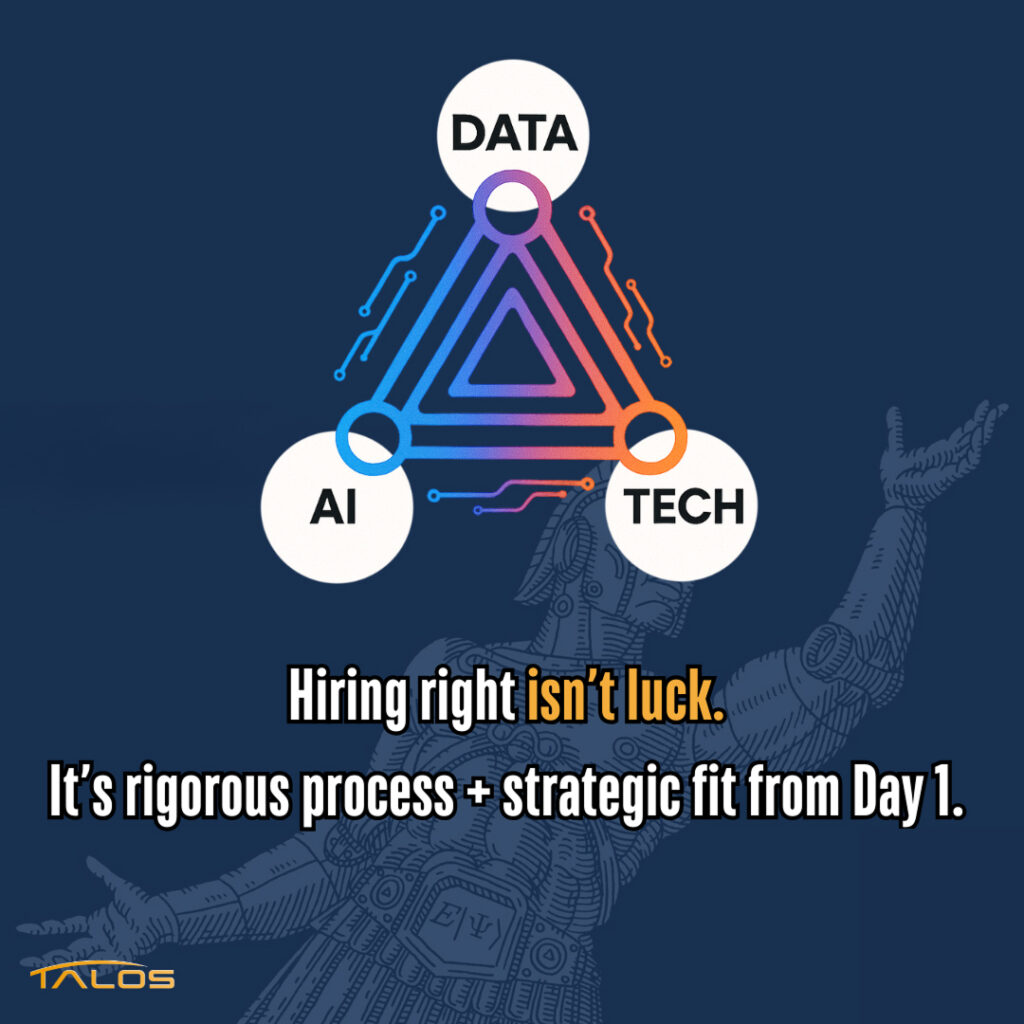
Is it just me, or is there a simple way to avoid wasting millions on your 𝗗𝗮𝘁𝗮/𝗧𝗲𝗰𝗵/𝗔𝗜 functions?
Having the right 𝘀𝘁𝗿𝗮𝘁𝗲𝗴𝗶𝗰 division leader in place.
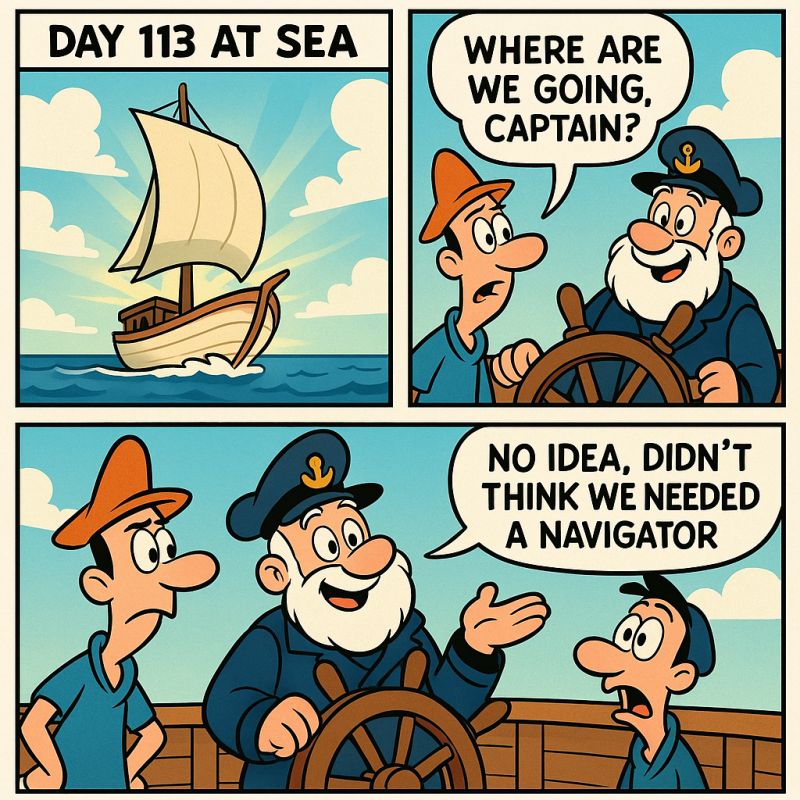
Let’s use a metaphor because I like them (English graduate, remember).
If you are sailing a boat through the open ocean, you need to know what direction you’re heading in before setting off.
As you progress, you need someone to keep the ship on course through stormy weather, navigation faults, pirates, and other obstacles.
Same thing with the person leading your Data/Tech/AI functions.
How do you find the right person?
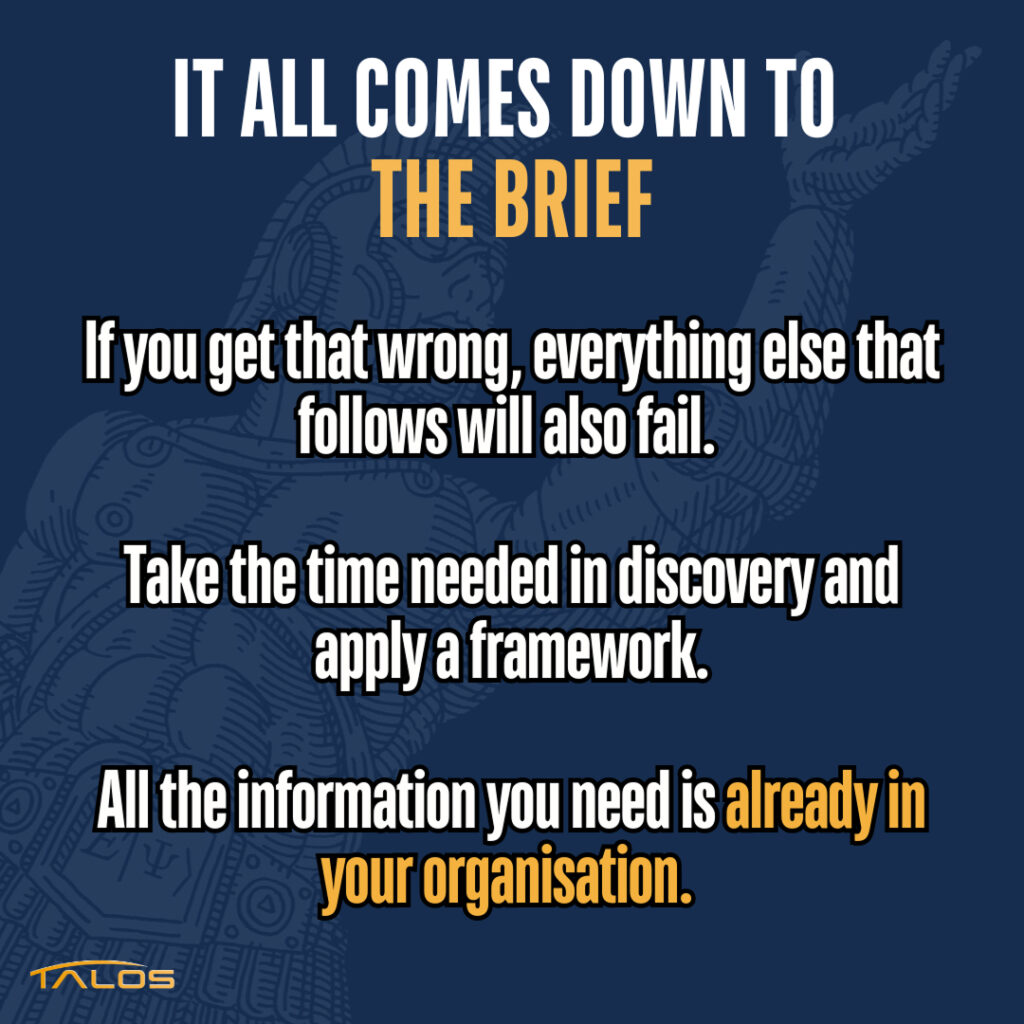
It starts with understanding and analysis. All centred around:
➡ Where are you now? (Current Capability, infrastructure, Culture, Process, Pipeline etc.)
➡ What are the problems you’re facing?
➡ Where do you want to go?
There is way more to understand than I could put in a single LinkedIn post, but these are the core questions you must know before attempting to market.
From my experience, you have to invest a lot of time to get the best hire.
Time to do all the above and more.
The more time you invest, the higher the % of hiring correctly.
When are things going to return to ‘normal’? They aren’t.
Risk aversion is the new normal; for the Job market and the economy, you have to adapt.
We’ve had 5+ years of massive changes with Covid, the economic fallout from Covid, major changes in western leadership, wars, the global rise of AI power, and so on.
This changes behaviour.
It makes people, and therefore companies, less likely to take risks unless there is a clearer ROI.
Because anything could happen in the current environment, unpredictability is unsettling.
Just take what’s happening to Co-op and M&S currently, how likely are they, and the rest of the retail world, to be taking risks at the moment or investing in new areas?
I think this filters down to every level of decision-making.
So if you are looking for a new job, getting funding for your start-up, selling your services or product, whatever the case may be.
You must manage risk through the ‘sell’ and what value you bring.
Your ‘sell’ has to be better now than it was 10 years ago to alleviate concerns and convince on ROI.
Which means sales skills are quickly becoming one of the most essential skills in the ‘new world’.
The adage “Everything is sales” has never been truer.
Companies need to think more about their reputation in the market.
I’ve heard many bad stories about hiring processes, and the question I usually follow up with is, would you apply again if you saw them in the future or forward the job to a colleague you know is looking?
The answer is always no.
And people talk. In a world of faster communication than ever before, a bad reputation can spread like wildfire.
Word of mouth is still the most powerful tool.
Bad processes, lack of communication, ineffective recruiting and screening, and even some cases of scarping candidates for information or strategies.
All will come back to bite you in ways you can’t see or measure, and you’ll lose out on swathes of the talent pools.
Especially, in close-knit communities like Data, AI and Tech.
Have you ever dissuaded a friend against a company you’ve had a bad experience with?
or investing in new areas?
I think this filters down to every level of decision-making.
So if you are looking for a new job, getting funding for your start-up, selling your services or product, whatever the case may be.
You must manage risk through the ‘sell’ and what value you bring.
Your ‘sell’ has to be better now than it was 10 years ago to alleviate concerns and convince on ROI.
Which means sales skills are quickly becoming one of the most essential skills in the ‘new world’.
The adage “Everything is sales” has never been truer.
Many companies have not been hiring the right data, AI, and tech (DAIT) leaders over the last year and a half.
And there will be fallout.
Just the other day, I saw a Head of Data role post at a 60-70k salary.
Which doesn’t come as a surprise to anyone looking at the moment.
It comes from the shift in the market that further knocked these functions as value centres.
And we find ourselves in, what recruiters call, a client-driven (or company-driven) market. Basically, less jobs and more people looking.
Companies have more power in the market, so they use it to tighten salaries.
However, if companies are putting more scrutiny on the value that Data, AI and Tech functions bring, hiring on lower salaries and trying to combine multiple roles into one, isn’t going to bring the value back.
These companies will have to come back to market, probably quite quickly over the next two years, probably with more frustration and less confidence in DAIT.
I’m not saying you need to pay really high salaries for every role, but you need to understand what you want to do with these functions, what problems need solving (to put it very simply), and then how much the level of expertise you require costs.
A important part of being a consultant is challenging your clients and asking them difficult questions.
Or at least that’s what I believe.
Usually, a company has engaged and paying a fee because they can’t do something, or the way they have been doing something isn’t working.
And as a consultant, you are brought in to, obviously consult, but ultimately improve or help said company get the outcome they want.
You need accurate data/information to do so.
You need to understand the difficulties they have faced, the failed attempts.
And informing expectations. Sometimes bringing a reality check of what is possible.
These all require hard questions, possibly a bit of awkwardness (if they aren’t forthcoming).
All worth it for the result.
Having another ‘yes man’ isn’t going to help solve your problem.

If you hadn’t heard, the UK has just announced a £30 billion deal with the US for Project Stargate UK.
I’ve read it all, so you don’t have to, and I’ve compressed the main points of the deal, along with whether we should be excited or concerned about what this could mean for the UK.
Bonus points if you recognise the reference in the picture I used.
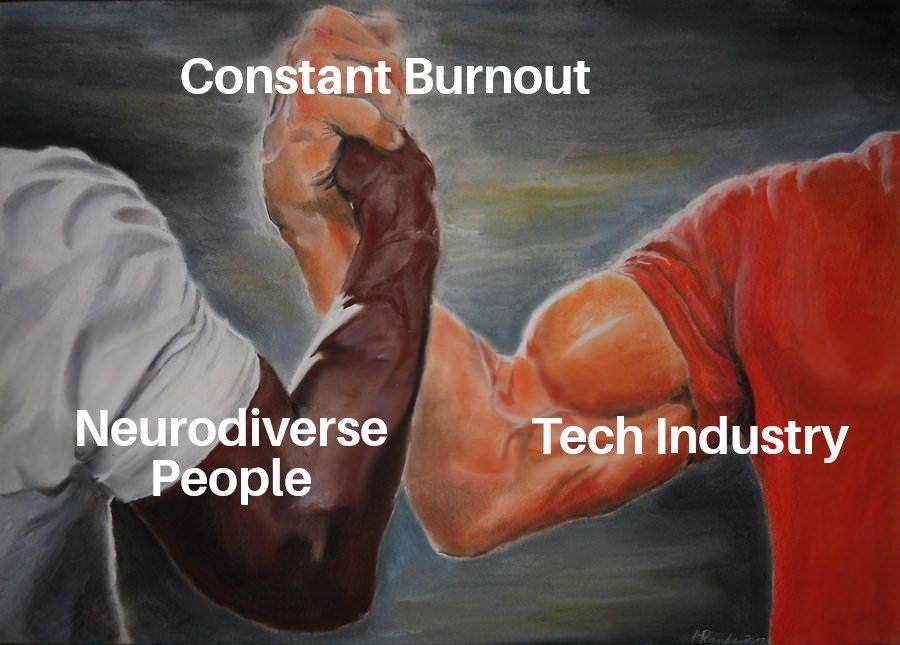
53% of ‘Tech’ teams view themselves as Neurodivergent.
So, what is it about the industry that attracts Neurodiversity?
This is part two of the post I made last week, and the report I’m drawing from didn’t answer that question.
But I’ve got a few ideas myself. 💡
I’m also including Data and AI under the banner of ‘Tech’.
Creativity is a big one, perhaps surprisingly, for a heavily technical environment. 🎨
I see in the people I speak to.
Creative problem solving, coming up with new ways to approach issues or coming up with ideas on how to optimise and working backwards to make it work.
It often becomes the number one priority in job hunting – interesting problems to solve – even over salary.
Some others:
– A great environment to hyperfocus, again, on those pesky problems.
– Rewarding environment for analytical, pattern recognition and logical leaning brains.
– Progression and career pathways based on results rather than how well you can network internally.
So we know that the teams you are leading are at least half full with Neurodiversity and that the industry will likely increase that number over time.
Then, investing time into understanding Neurodiversity and, most importantly, getting the best out of your team and avoiding that ever-looming burnout is a good idea.
Right?

What’s the secret sauce to getting the right hire?
Time. ⏳
That’s not all there is to it. Having a strong network helps, as does being able to write good, engaging copy that sells your business.
But to me, time is the most important. Especially at the beginning of the process, before you’ve even looked at a CV, if you spend the time to analyse your business and why you need this hire (what problems they solve etc.), it will make the rest of the process smoother.
Laying the foundations of the search.
If you have that information, then you can sell the job better, screen candidates more efficiently, get an offer out quickly and so on.
This also goes for the screening. Spend time with the people who have applied and on the structure of the interview process so it can effectively assess the people you put through it in relation to the job you want to fill.
Do all this, and your percentage of getting the right hire will increase.
Time is a difficult one. It is the one commodity you can’t get more of.
But you can’t tell when companies haven’t put the time into the search. Job searchers can tell (believe me), and the number of bad job ads you see literally shows how little time has been invested into them.
And if that little time has been invested into the job ad, then how much time will be invested into the hire? It’s all linked.
That’s why companies use recruiters like me because we can spend the time (it’s all we do) when they can’t, and time equals money.
What do you think? Is time the secret sauce, or is it something else?

AI is going to replace Recruitment Consultants.
That’s what I’ve seen recently, or at least a conversation underway on Linkedin about it.
I thought I’d chime in with my two cents as, like usual, I have thoughts.
Many of them.
AI is already creeping its way into the recruitment process, mainly (from what I’ve seen) at the start of the process, CV screening etc.
What’s one thing it’s particularly good at?
Volume.
Specifically, the automation of high-volume processes and sifting through large amounts of text. It will always be able to do this much faster than humans. Accuracy is a different topic, however.
Therefore, in high-volume recruitment (like Graduate hiring or at the junior ends of the market) where there are naturally more candidates and more applications. AI implementation will thrive.
What does this mean for Recruiters?
Like most industries, I don’t think AI will destroy recruitment consultancies, but it will force them to change.
Gone will be the days of using agencies to fill hundreds of roles because it doesn’t make sense for a company to spend 100x more with an agency on fees when AI can do it for a fraction of the cost.
Especially, if it’s just keyword-searching, low-quality recruitment.
Even if the quality drops with AI (which it will initially), the ££ savings will be too large of a gap for agencies to compete with.
Plus, the more data you feed these models by using them, the better they will become.
I honestly think larger recruitment firms will struggle and will probably need to downsize.
What will take their place will be the hyper-specialised recruitment agencies offering a quality service for niche, or critical, hires that companies have to spend the time and the £ to get right.
These companies already exist. We will just see more of them.
I also think we’ll see more one-band recruiters or very small teams of people.
They’ll offer great service with fewer overheads than the larger firms (so the industry still keeps the high-earning potential) and with most of the back office stuff done by AI or outsourcing.
I think people want this change as well, and AI is just the straw that broke the camel’s back.
Recruiters have a bad reputation for a reason, and it comes from the high-volume make-as-much-money-as-you-can recruitment that became popular in the 90s (or thereabouts) and is the go-to model for scaling a recruitment firm now.
CV tip for anyone looking for work (or considering it).
Think about the ‘audience’ for your CV and its purpose.
To preface this, my personal view of CVs is that there isn’t a ‘right’ or ‘wrong’ way to do them, but you can adapt to the environment.
The obvious answer for your audience is the hiring manager, but you usually persuade them in the interview process so I would say the purpose of the CV is to persuade the gatekeeper: HR, internal talent acquisition, recruiter or the dreaded ATS system!
And that’s what a CV is in essence – a sales document.
You, selling yourself and your experiences in relation to a role.
This can be difficult when you become more senior as you’ve done a lot, so putting everything down can turn into lengthy paragraphs quickly.
But a CVs purpose is to hook the gatekeeper into action – a telephone call, an email, whatever that might be.
They need to see your relevance to the role quickly and, ideally, be curious.
A couple of tips:
– Most TAs at the moment are overworked and recruiting for lots of different roles throughout the business, so they might not understand in-industry terms or heavy technical jargon.
– Screening CVs is boring, and anyone who tells you differently is lying. It can be one of the most monotonous tasks of being a recruiter, so human psychology will take over, and skim reading will happen. Don’t keep all the good stuff hidden in walls of text as it could get missed, especially if you happen to be CV 589 out of 1000 they have to look at that day.
– Buzzwords are a necessary evil at the moment. RE: ATS system.
– Don’t be afraid to ‘sell’ using language. If your CV is easy on the eye and engages the reader by reading well, then it keeps eyes on your CV.
– You want a key sellable bit of experience (a job, education, whatever) to the roles you are applying for on the first page. Usually, a recruiter will jump to the most recent experience to put that person into context, so make sure it’s near that if it isn’t your most recent experience.
– You don’t have to have everything on there. If a CV is the starter in a meal then you are the main course, and a starter’s job is to get you hungry for the main course.
– Results are important at the moment (especially in data, AI/ML and tech). It doesn’t have to be ‘x equalled to x percentage increase in revenue’, but you want to end your points with a positive outcome, the cherry on the cake.
Hopefully, there are a few takeaways for anyone in the excruciating process of re-writing a CV.
I’m always happy to do a CV review session, so drop me a message.
I’m nice, I swear.
The Future of Data leadership is fractional.
Or it could be.
The signs are there. Over the last six months, I’ve had more conversations about fractional work than I’ve ever had before.
And more explorative conversations coming from professionals that have only worked in perm.
Taking the CDO as an example, the average tenure for this position is 2-2.5 years, which is significantly lower than other C-suite roles.
It is a newer role by comparison, but it seems like there are other factors at play.
As data strategies evolve, the need for a certain type of Data leader can change as well. The one you start with might not be the one you need two years later.
It’s also a solution that could fit within the current environment. My last post expanded more on this (I’ll link it in the comments), but essentially, the average spend on Data has retracted over the last year.
Here is an example.
If you are a Data immature company and want to start building your Data capability, hiring a Data leader on a fixed term or a 3-day-a-week contract could be a cost-effective way of getting the right level of talent needed.
I think Data Leaders would tend to agree that coming in for a fixed time to start the journey of Data capability, to solve a particular problem, to complete a project or to create a data strategy is attractive as a role – clear deliverables and timeframe, more buy-in from each side.
Rather than existing in limbo on a perm role at a company that doesn’t know what to do with their data (or at least won’t listen to what their Data leader is suggesting). Essentially, something a bit boring.
Fractional work is at least going to become a more popular choice for both sides.
AGI is this decade’s ‘space race’ for the private sector.
Has this become a vanity project to stick a digital flag into? The quest to become the Frankenstein to AGI’s monster and be the first to do it over other competitors, and China.
That’s a bit of a harsh statement, I admit.
Elons new start-up to compete with OpenAI just raised $6 billion in series B funding with a post-money valuation of $24 billion.
Crazy money.
But why do we need AGI? What’s the actual benefit other than ‘it’s cool’?
Don’t get me wrong, I think AI can be utilised effectively. I count myself lucky that I’m a Data & AI Executive Search Consultant and get to work with true innovators. See/hear first-hand accounts of it done correctly, where AI improves efficiency, brings in revenue, saves time, optimisations, cost-savings etc.
We are still figuring out how machine learning and GenAI can fit into companies across every sector and still provide value, as well as its wider impact and implications geopolitically and sociologically.
And I can’t help but think that the money would be better spent elsewhere.
How many other start-ups could have been funded by that money?
What would the benefit of AGI be that machine learning and GenAI couldn’t already provide?
It doesn’t seem like the AI hype train (or rocket?) is slowing down any time soon, despite these questions.
Data is just a form of Technology, isn’t it?
Words to make any data professional shudder,
Technology is used in Data, coding etc., but it’s not the defining factor of data work.
So why are seeing data being pushed towards technology at the moment?
Data leaders are being asked to be hands-on and assessed on their Python skills instead of strategy skills.
Most job specs you see on LinkedIn for any type of data professional are mostly a laundry list of technical skills, a keyword search for ATS systems or a tickbox exercise.
Engineers and architects (all types) are in the most demand right now because companies seem to want everyone in the backend ‘building’, so value is created.
Don’t get me wrong, that’s a very important part of data work. You need good infrastructure, but data should be visible and integrated everywhere in the business. That’s where the value will be created.
It seems that where budgets are tighter, hiring is defaulting to dragging data towards a priority on technical skills rather than what makes data work for the business – insights and analysis, for example.
Okay, rant over.
I wanted to post about this because of conversions I’ve been having over the last couple of days and what I’ve been seeing in the market for the last 6 months.
However, I can only see what I’ve experienced, so I’d be interested to know if other people think the same or if am I barking up the wrong tree. 🐶 🌲
Only 48% of digital initiatives enterprise-wide meet or exceed business outcome targets.
That’s from Gartner.
What do you think of this figure?
I’ve been doing some research into the Data, AI, and Tech Senior/Leadership market and their impact on businesses.
A lot is pointing to digital transformation being essential but also costly, with a high risk of not getting a full ROI.
And success will hinge on the right leader implementing the right strategy.
I’ll keep sharing what I find.
Gartner article here
I'm not going to hide the price - it'll be between 10-30k. No bias in the process, no sudden increases because you want to pay the candidate a better salary to get top talent.